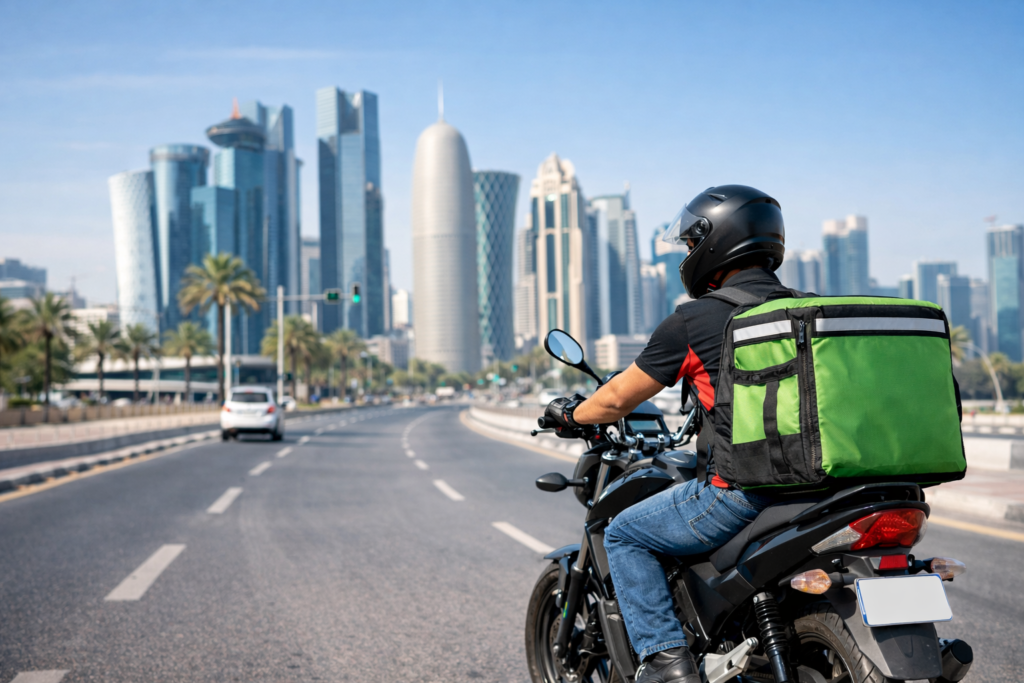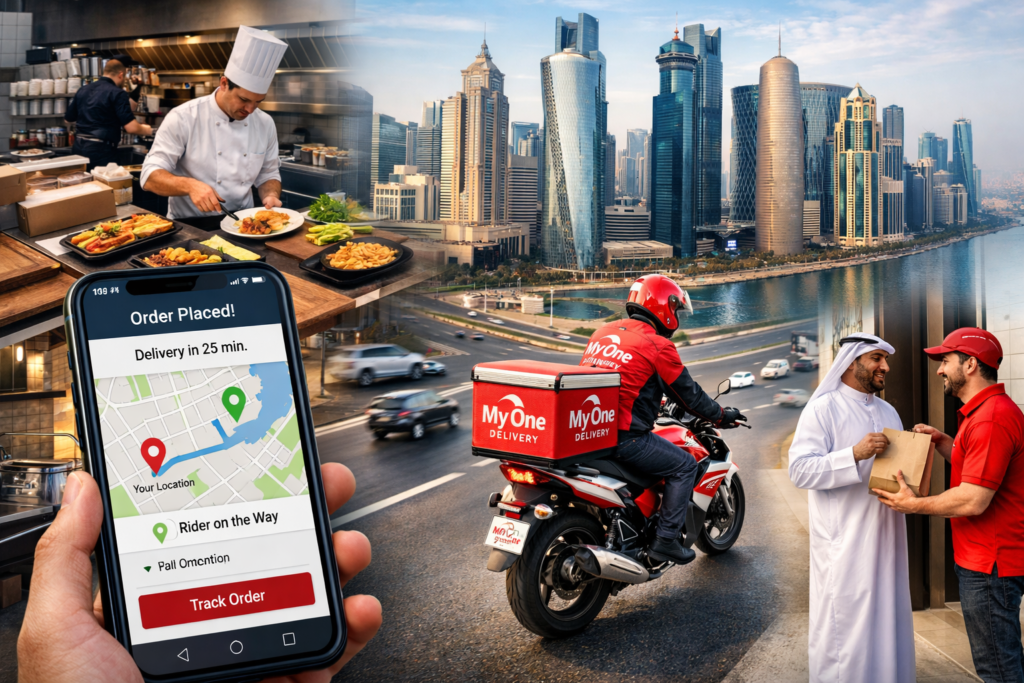
A delivery rider in Qatar plays a vital role in supporting the country’s fast-moving lifestyle and growing digital economy. From early morning streets in Doha to evening deliveries in Lusail and Al Wakrah, delivery riders ensure food, groceries, and parcels reach customers safely and on time.
As demand for delivery services continues to rise, the daily routine of a delivery rider in Qatar has become more structured, challenging, and essential. This article explores a full day in the life of a delivery rider, highlighting their responsibilities, challenges, and importance across Qatar’s cities.
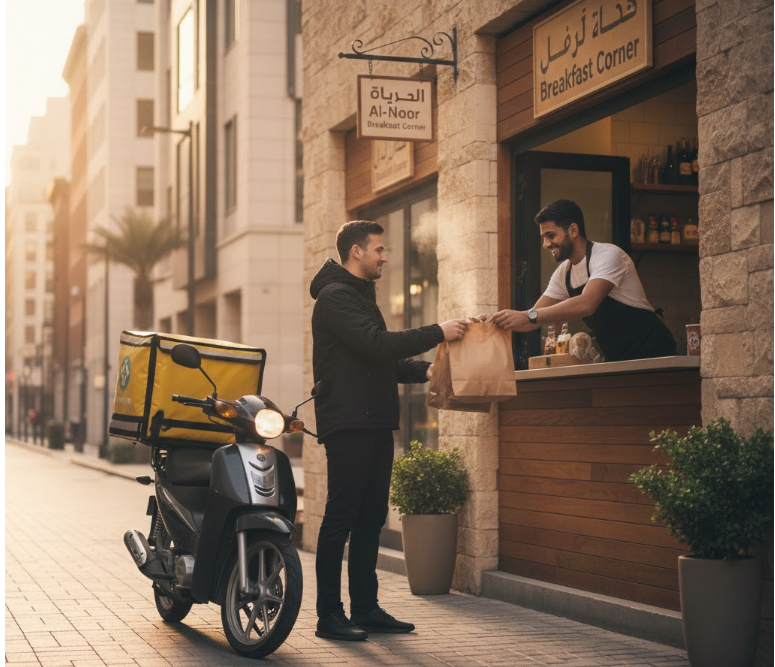
Morning Routine of a Delivery Rider in Qatar
The day for a delivery rider in Qatar often begins before sunrise. Early mornings in Doha offer cooler temperatures and quieter roads, allowing riders to complete their first deliveries efficiently.
Before starting, riders typically:
- Check delivery apps for assigned orders
- Inspect bikes for fuel, brakes, and safety
- Prepare insulated delivery bags
- Plan routes based on location
Morning deliveries usually include breakfast orders, bakery items, groceries, and urgent parcels. These early hours are crucial, as punctual deliveries help businesses maintain trust with their customers.
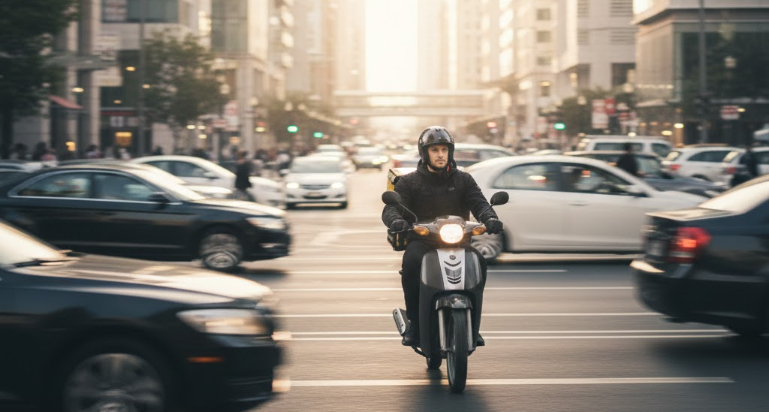
Mid-Morning Challenges for Delivery Riders in Doha
By mid-morning, traffic increases across Doha, West Bay, and Al Rayyan. Offices start placing orders, and customer demand begins to grow. At this stage, experience becomes critical for every delivery rider in Qatar.
Riders rely heavily on:
- Local route knowledge
- Traffic awareness
- Efficient parking decisions
- Clear communication with customers
Even small delays, such as building access or elevator wait times, require patience and adaptability. Professional delivery riders understand how to manage these challenges while maintaining service quality.
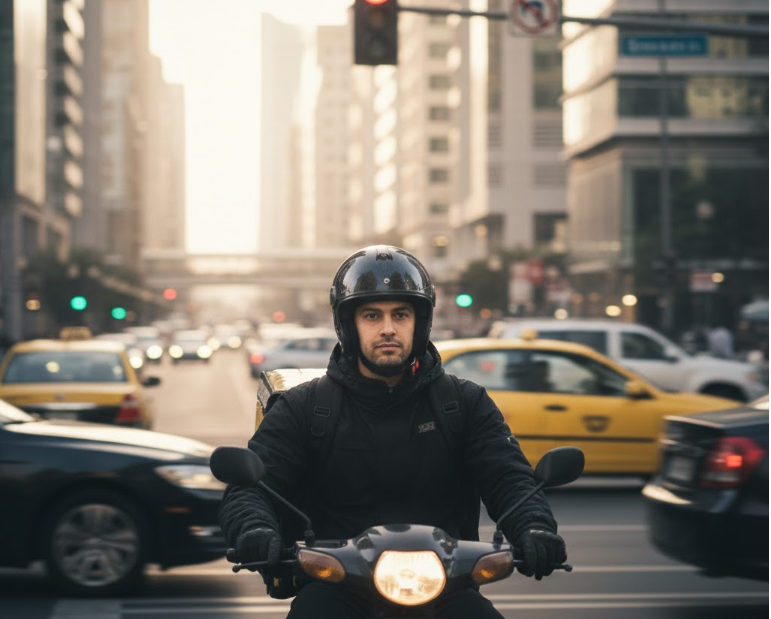
Lunch Rush: Peak Hours for a Delivery Rider in Qatar
The lunch period is one of the busiest times for a delivery rider in Qatar. Restaurants receive high volumes of orders, especially in Doha, Lusail, and The Pearl.
During this rush, riders must:
- Handle multiple deliveries simultaneously
- Keep food items secure and fresh
- Navigate congested streets efficiently
- Maintain constant communication
Local experience allows delivery riders to choose faster routes and avoid high-traffic zones. Successful lunch deliveries build strong ratings and long-term customer trust.
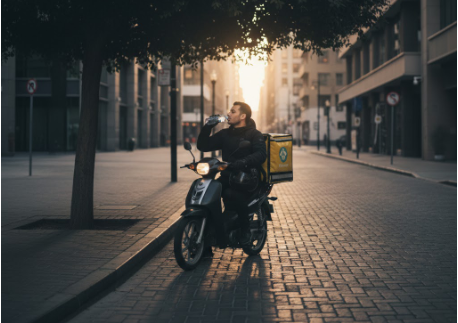
Afternoon Endurance and Efficiency
Afternoons can be physically demanding, particularly during Qatar’s warmer months. A delivery rider in Qatar must manage heat, fatigue, and concentration while continuing to deliver orders accurately.
Common afternoon deliveries include:
- Grocery items
- Office supplies
- Small parcels
- Repeat customer orders
Hydration, short breaks, and proper planning are essential for maintaining productivity. Experienced riders often group nearby orders to save time and reduce fuel usage.
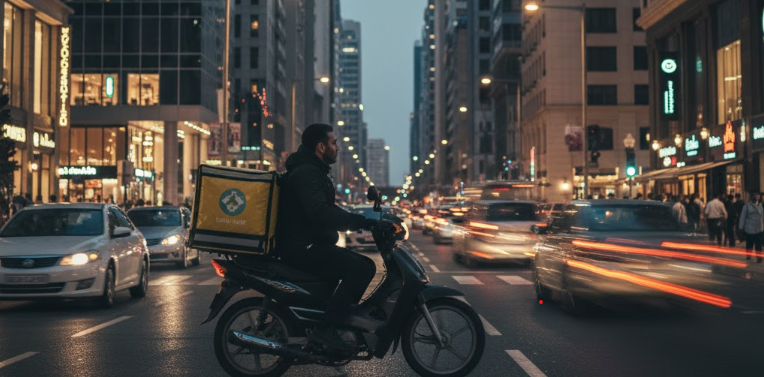
Evening Rush for Delivery Riders in Qatar
The evening period marks the second peak of the day. Families order dinner, offices place late requests, and demand increases across Doha, Al Wakrah, and Lusail.
For a delivery rider in Qatar, the evening rush requires:
- Strong time management
- Multitasking skills
- Professional customer interaction
- Safe riding under heavier traffic
This is often the most challenging yet rewarding part of the day, as riders complete the highest number of deliveries within limited time frames.
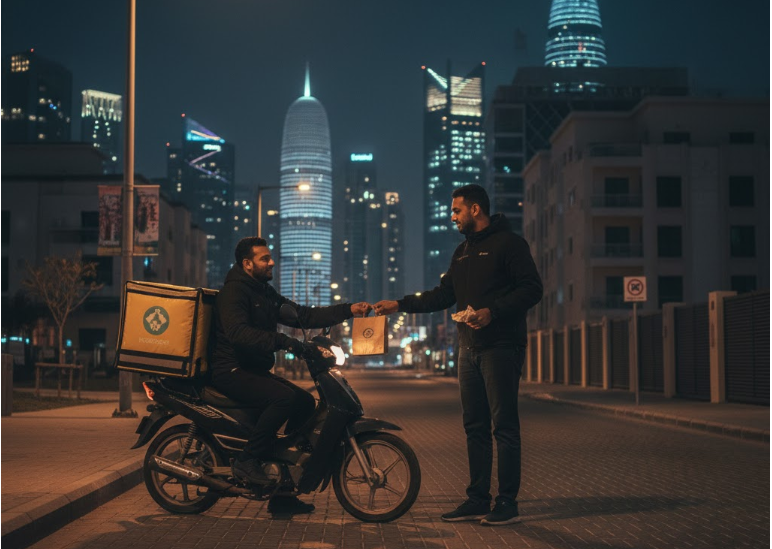
Night Deliveries and Closing the Day
As night falls, streets gradually become quieter. A delivery rider in Qatar completes the final deliveries, often to residential neighborhoods and late-night customers.
Night deliveries require alertness and accuracy. Once completed, riders return home to rest and prepare for the next day. Despite physical exhaustion, many riders feel satisfaction knowing they contributed to keeping Qatar’s delivery network running smoothly.
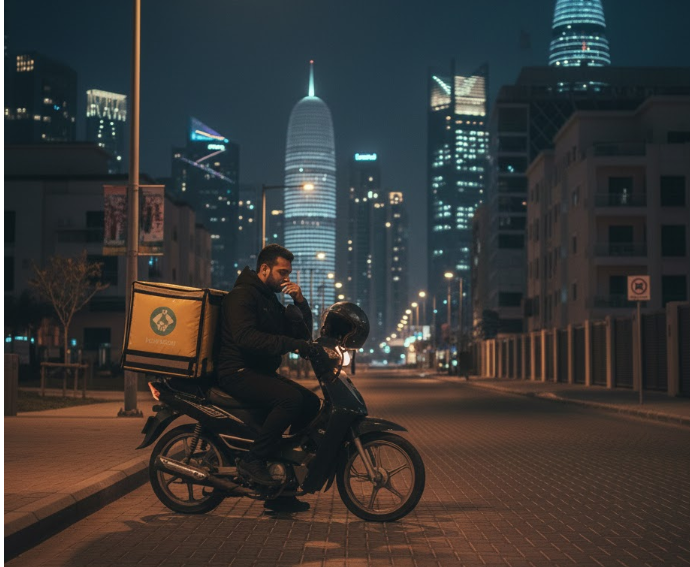
The Human Side of a Delivery Rider in Qatar
Beyond transporting packages, a delivery rider in Qatar represents reliability and service. Their dedication supports restaurants, businesses, and households across the country.
Riders develop:
- Strong local knowledge
- Customer service skills
- Physical endurance
- Professional discipline
Their work ensures convenience for thousands of customers every day..
Why Delivery Riders Are Essential in Qatar
With Qatar’s urban growth and busy lifestyles, delivery riders have become essential. From morning coffee deliveries in Doha to late-night grocery orders in Al Wakrah, a delivery rider in Qatar keeps daily life moving.
To learn more about local delivery services and rider opportunities, visit:
Official Guidelines for Delivery Riders in Qatar
Delivery riders must follow Qatar’s traffic and safety regulations. Official guidelines are provided by:
- Ministry of Interior Qatar – Traffic Rules
- Hukoomi – Government Services
These regulations ensure safety for riders and road users alike.
Conclusion
The life of a delivery rider in Qatar is demanding, structured, and impactful. From early mornings to late-night deliveries, riders navigate traffic, weather, and customer expectations with dedication and professionalism.
Understanding their daily routine highlights the effort behind every successful delivery. The next time a rider arrives at your door, remember the commitment and hard work that made it possible.
Frequently Asked Questions (FAQ)
What does a delivery rider in Qatar do daily?
A delivery rider in Qatar handles food, grocery, and parcel deliveries across cities like Doha, Lusail, and Al Wakrah while ensuring timely and safe service.
Is being a delivery rider in Qatar difficult?
Yes, it requires physical endurance, local route knowledge, and strong time management, especially during peak hours.
Which cities do delivery riders in Qatar serve?
Delivery riders operate across Doha, Lusail, Al Rayyan, Al Wakrah, and surrounding residential areas.
Are delivery riders in Qatar regulated?
Yes, riders must follow traffic and safety rules set by Qatar’s government authorities.
Why are delivery riders important in Qatar?
They support businesses, provide convenience to residents, and keep the country’s fast-paced lifestyle running smoothly.